The buying framework
We judge honey on five clear, repeatable criteria. Score any jar against them and you'll rarely go wrong:
| Criterion | What to look for | Red flags |
|---|---|---|
| Traceability | Named origin, producer, harvest season | Vague "blend of Indian honey", no source |
| Processing claims | Honest "raw" or "processed" labelling | Unclear or exaggerated processing claims |
| Testing | Shared lab reports (C4, rice syrup marker, HMF) | No testing info, or refusal to share |
| Origin | Single-origin or clear GI/regional identity | Anonymous blends priced as single-origin |
| Price sanity | Fair price for the type; not suspiciously cheap | Premium claims at rock-bottom prices |
Reading the label
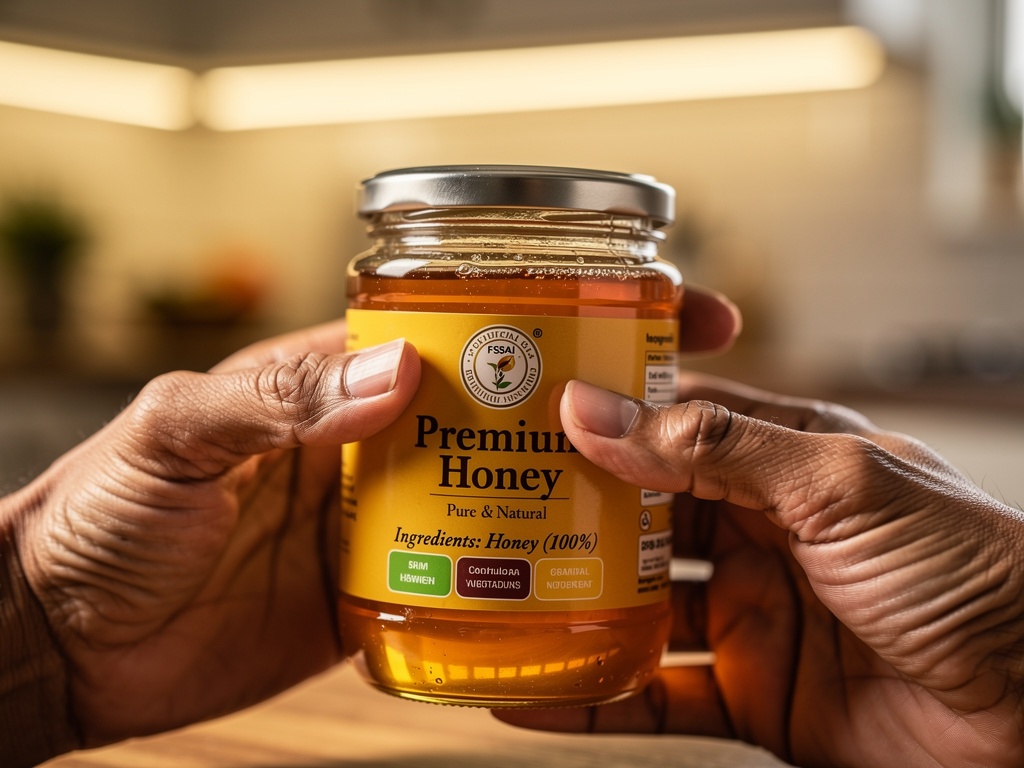
A good honey label in India should tell you:
- FSSAI licence number — the legal requirement for packaged food.
- Net weight and best-before date.
- Ingredients: for pure honey, "100% honey" — nothing else.
- Origin: region or GI identity where claimed.
- Processing: raw/unpasteurised vs processed, where claimed.
- Producer details: who made it and where they can be reached.
Questions to ask sellers & brands
-
Where is this honey from, exactly?
A named region or GI is better than "India". Traceability is the first pillar of trust.
-
Is it raw or processed, and how was it handled?
Ask about heating and filtration. Honest producers will tell you plainly.
-
Can you share lab test results?
Look for C4 sugar analysis, the rice syrup marker (AFGP), HMF and moisture. Real producers share these.
-
Is it single-origin or a blend?
Blends are fine if labelled honestly; they're a problem only when sold as single-origin.
-
Who are the producers, and how are they paid?
Cooperatives, tribal groups and named beekeepers suggest a fairer, more traceable chain.
-
Why is the price what it is?
A fair price reflects risk, origin and testing. A suspiciously cheap "premium" honey is a red flag.
Raw vs processed: choosing
Both can be pure and good — the choice is about what you want:
- Raw honey: minimally processed, retains enzymes, pollen and antioxidants; may crystallize. Best for those who want maximum character and natural compounds.
- Processed honey: filtered and often gently heated for clarity and a long liquid shelf life. Fine for everyday use, but some beneficial compounds are reduced.
- Blended honey: consistent flavour and price; choose it when you value convenience, but know it may hide origin.
The full honesty breakdown — including what "pure" legally means — is on the Quality & Purity page.
Price sanity checks
- Genuine honey has a floor price: honey costs more to produce than sugar syrup. Extremely cheap honey is suspect.
- Named varieties cost more: monofloral, GI and wild honeys are premium — cheap "litchi" or "Sundarban" honey is likely mislabelled.
- Compare per-kg, not per-jar: different jar sizes hide price differences.
- Beware of "premium" at bargain prices: if the story says premium but the price says commodity, something is off.
Where to buy
- Local beekeepers & cooperatives: the most traceable option — you can ask questions directly.
- Farmers' markets & haats: good for regional honeys, but ask the same questions.
- Reputable brands with shared lab reports: fine if they publish testing and origin.
- GI-registered producers: for regional specialties, buying registered producers protects the tag.
Storing what you buy
- Keep it sealed — honey absorbs moisture and can ferment.
- Store cool and dry — room temperature, away from sunlight.
- Use clean, dry utensils — moisture or food spoils the jar.
- Re-liquefy gently — warm water bath, never boiling or microwave.
- Don't refrigerate — it accelerates crystallization (which is fine, just less convenient).
More storage detail on the Culinary & Culture page.
Keep exploring
- Quality & Purity — the science behind the framework
- Types & Varieties — what each honey should be like
- GI & Regional Specialties — honey with protected provenance
- Ethics & Livelihoods — buying that does good