What is a GI tag?
A Geographical Indication (GI) is a sign used on products that have a specific geographical origin and possess qualities or a reputation due to that origin. In India, GIs are registered with the GI Registry (under the Department for Promotion of Industry and Internal Trade). For honey, a GI tag protects regional identity — it means the honey genuinely comes from that place and meets its defined characteristics.
GI tags matter for trust: they give consumers a verifiable origin claim and give producers legal protection against misuse. But a GI tag is not a purity certificate — the honey must still meet FSSAI quality standards. Both matter.
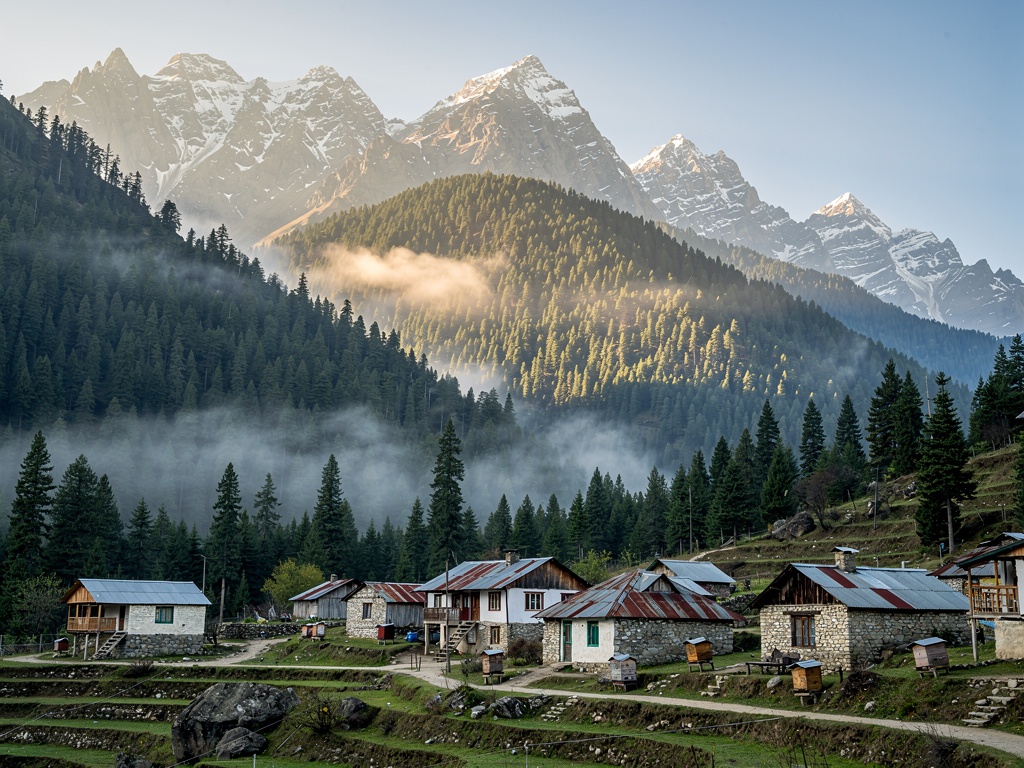
Ramban Sulai honey (Jammu & Kashmir)
Produced in the Ramban district of Jammu & Kashmir, in the Pir Panjal range of the Himalayas, Ramban Sulai honey comes from wild bees foraging on high-altitude flora. It is a GI-registered specialty known for its distinctive character — a product of the region's clean air, wild flowers and traditional harvest. It's a flagship example of Himalayan wild honey with protected provenance.
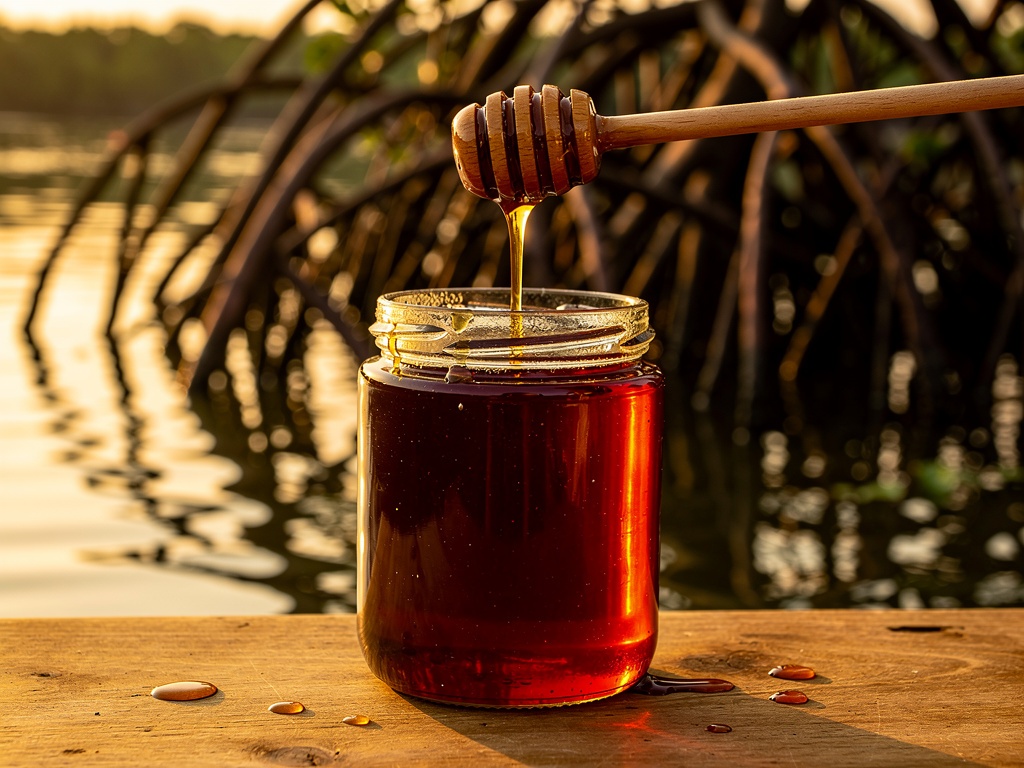
Sundarban Mouban honey (West Bengal)
From the tidal mangrove forests of the Sundarbans, Mouban is the honey of the region's Mouli collectors. It is dark, malty and faintly salty-sweet — a reflection of the mangrove nectar — and it is GI-protected. It is one of India's most storied honeys, produced under genuinely hazardous conditions (see Ethics & Livelihoods).
Marthandam honey (Tamil Nadu)
From the Marthandam region of Tamil Nadu (near Kanyakumari), this honey is associated with the area's rich floral diversity. It is among the GI-related or GI-aspiring honeys that highlight how regional identity is being formalised across the south.
Other regional & emerging specialties
Beyond registered GIs, India's honey geography is rich and growing. Keep an eye on:
- Himalayan wild honeys (Uttarakhand, Himachal Pradesh, J&K) — multiflora, often dark and complex.
- Western Ghats forest honeys (Kerala, Karnataka, Tamil Nadu, Goa) — including rare stingless "pot honey".
- Litchi honey from the Bihar belt (Muzaffarpur and around).
- Mustard honey from Punjab, Haryana and Rajasthan.
- Sidr / beri honey from arid belts.
- Ajwain, tulsi and neem honeys from herbal-crop regions.

Reading a regional honey
| Honey | Colour | Flavour | Crystallization | Season |
|---|---|---|---|---|
| Ramban Sulai | Amber to dark | Rich, herbal, floral | Slow to moderate | Spring–summer |
| Sundarban Mouban | Dark amber | Malty, slightly salty-sweet | Moderate | March–June |
| Marthandam | Golden amber | Floral, mild | Moderate | Varies |
| Litchi | Pale gold | Delicate, fruity, rose-like | Slow | April–May |
| Mustard | Light amber | Spicy, pungent | Fast | Winter |
| Western Ghats forest | Dark | Intense, floral | Moderate | Post-monsoon |
Sensory notes are indicative. Character varies with season, harvest and processing.
How to verify a GI honey
- Check the GI tag / registration: look for the GI number and the registered producer.
- Confirm the origin: the label should name the region and ideally the producer.
- Ask for lab tests: a GI tag protects origin; FSSAI testing protects purity. You want both.
- Beware of cheap "GI" honey: genuine GI honey is premium — suspiciously cheap jars are likely mislabelled.
- Support registered producers: buying from GI-registered producers protects the tag and the community behind it.
For the full buying framework, see the Buying Guide.
Keep exploring
- Types & Varieties — sensory profiles across India
- Buying Guide — how to choose and verify
- Quality & Purity — GI is about origin; purity is about content
- Ethics & Livelihoods — the people behind the regions