What does "pure honey" actually mean?
Legally and practically, pure honey is honey that comes from bees, with nothing added and nothing taken away beyond what processing requires. Under Indian food law (FSSAI), honey must not contain added sugar, syrup or any other substance, and it must meet defined compositional parameters.
The challenge is that "pure" is a claim that must be verified. In India, a wave of adulteration — most notoriously rice syrup engineered to pass older tests — has damaged consumer confidence. The good news: testing has caught up. Modern labs can now detect these sophisticated adulterants, and FSSAI has strengthened its parameters. The bad news: no home test can match a lab.
FSSAI standards: what is tested
FSSAI's standards for honey cover composition, quality and authenticity. Key parameters include:
| Parameter | What it measures | Typical standard |
|---|---|---|
| Moisture | Water content; lower = more stable | Not more than ~20% (varies by honey type) |
| Reducing sugars | Main sugars (fructose + glucose) | Not less than ~65% |
| Sucrose | Table sugar; high levels suggest feeding or adulteration | Not more than ~5% (lower for some types) |
| HMF (hydroxymethylfurfural) | Heat/freshness marker; treated as a quality parameter | Not more than 80 mg/kg (lower for honey declared "raw" or unprocessed) |
| C4 sugars | Corn/cane-derived sugar via isotopic ratio | Not more than 7% (FSSAI threshold) |
| Specific Marker for Rice Syrup (AFGP) | Detects rice syrup adulteration | Absent / not detected |
| Fructose–glucose ratio | Natural balance indicator | Within defined range |
| Isotopic ratios (C13) | Distinguishes plant sugars from added C4/C3 syrups | Within defined limits |
Standards evolve; always refer to the current FSSAI notification. HMF ≤80 mg/kg is treated as a quality parameter in FSSAI's approach. See Resources for official links.
The adulterants to know about
- Sugar syrups (cane, corn, beet): the classic adulterants, detected by C4 sugar analysis and isotopic ratios.
- Rice syrup: the modern problem — engineered to mimic honey's sugar profile and pass older tests. Detected by the Specific Marker for Rice Syrup (AFGP) and advanced methods like NMR.
- Jaggery / inverted sugar: cheaper sweeteners sometimes blended in, detectable by sugar profiles.
- Water dilution: reduces quality; caught by moisture and sugar tests.
- Feeding bees sugar: bees fed sugar syrup produce honey with abnormal sugar profiles — a form of adulteration that tests can flag.
These are exactly why "it looks and tastes like honey" is not enough. The sophistication of modern adulteration means the only reliable verification is laboratory testing.
Home tests: what works, what doesn't
Home tests are popular and fun, but they must be used honestly. Here is the reality of the common ones:
| Test | What people claim | Reality |
|---|---|---|
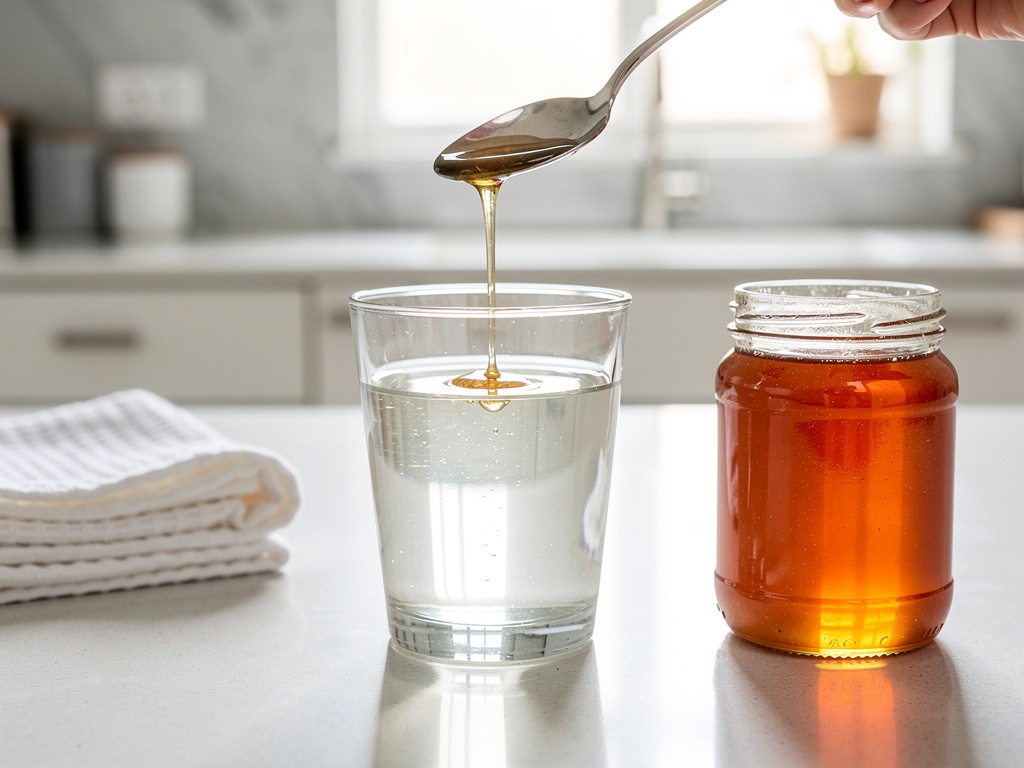
| Water test | Pure honey doesn't dissolve easily in water | Partially true but unreliable — viscosity and temperature change the result |
| Thumb test | Pure honey stays on your thumb, doesn't spread | Depends on moisture and temperature; a weak indicator |
| Flame test | Pure honey burns | Unreliable and potentially dangerous; moisture content decides |
| Paper / cloth test | Pure honey doesn't soak through | Only detects very watery honey; misses syrup adulteration |
| Bread test | Pure honey hardens bread | Not a valid purity test |
| Crystallization | Honey that crystallizes is pure | Mostly true as a positive sign — real honey crystallizes naturally; but some adulterated honeys also crystallize, so it's not proof |
Lab methods: how the fakes are caught
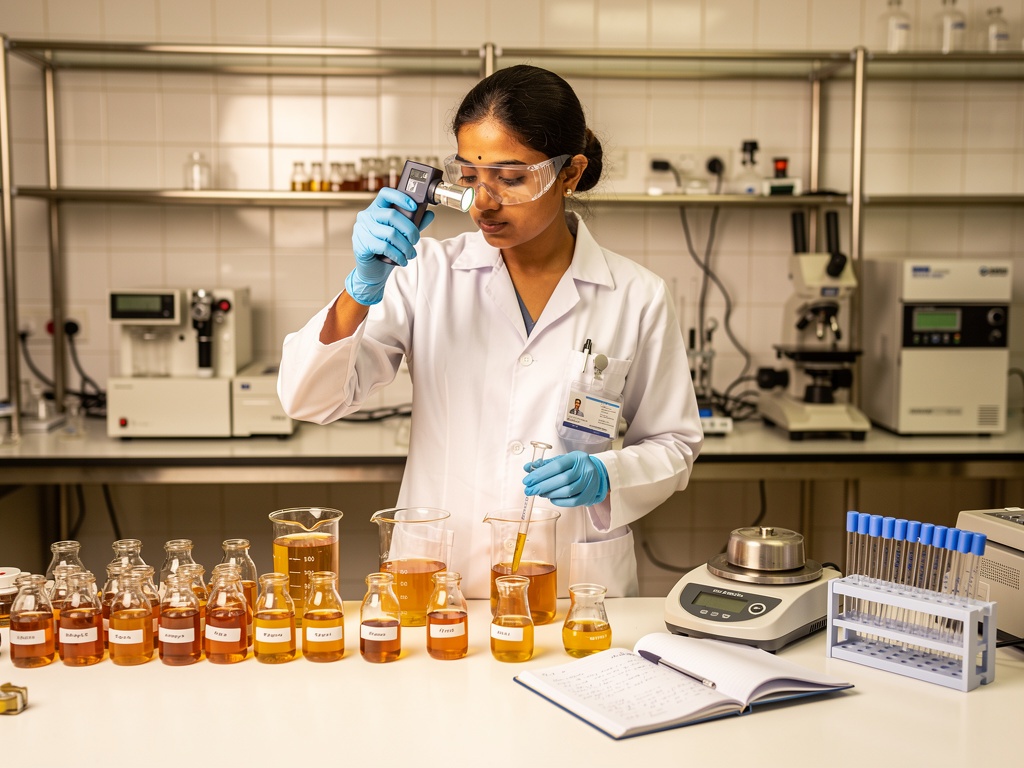
Real verification happens in accredited laboratories. The key methods:
- Stable isotope ratio analysis (C13): compares carbon isotope ratios to detect added C4 (corn/cane) sugars.
- Specific Marker for Rice Syrup (AFGP): detects the rice-syrup marker that older tests missed — a direct response to India's adulteration problem.
- NMR (Nuclear Magnetic Resonance): a powerful fingerprinting method that can detect multiple adulterants and even geographic origin.
- Pollen analysis (melissopalynology): identifies floral sources — useful for verifying monofloral claims.
- Sugar profile (HPLC): measures individual sugars to spot abnormal profiles.
- HMF and enzyme (diastase) tests: assess freshness and heat damage.
Crystallization: natural, and often a good sign
Honey crystallizes because it is a supersaturated sugar solution — glucose separates into crystals over time. This is natural and expected, and it is often a positive sign of purity, because many adulterated or heavily processed honeys are engineered to stay liquid. Different honeys crystallize at different rates: mustard honey crystallizes quickly, acacia honey slowly.
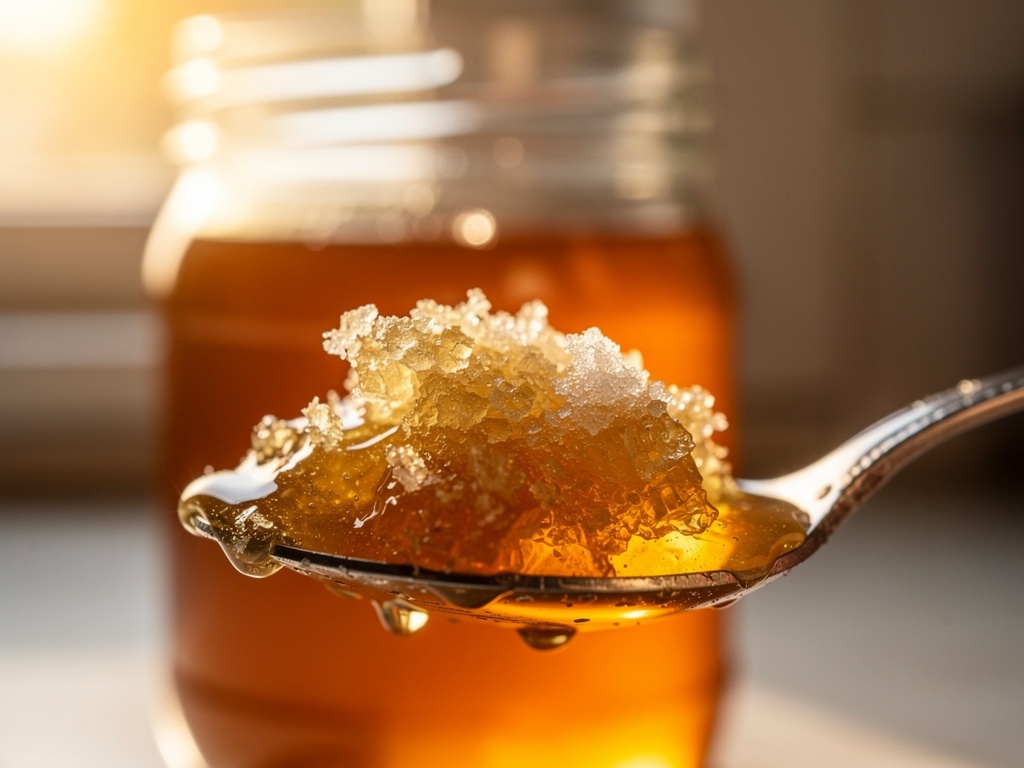
To re-liquefy crystallized honey, place the jar in warm (not boiling) water and stir gently. Avoid high heat, which raises HMF and destroys enzymes. See our Culinary & Culture page for storage tips.
Myths debunked
| Myth | Fact |
|---|---|
| "Pure honey never crystallizes" | False — natural honey crystallizes; it's often a positive sign. |
| "If it doesn't dissolve in water, it's pure" | Unreliable — viscosity and temperature dominate the result. |
| "All 'raw' honey is pure" | Not automatically — raw refers to processing, not absence of adulteration. Both must be verified. |
| "Dark honey is always better" | Colour relates to floral source, not purity or quality. |
| "Expensive honey is pure" | Price is no guarantee — adulteration can happen at any price point. |
| "Honey never spoils" | Properly stored honey lasts a very long time, but contamination or high moisture can cause fermentation. |
Price & quality sanity checks
- Too cheap is a red flag: genuine honey costs more than sugar syrup. Extremely cheap "honey" is likely blended or adulterated.
- Named varieties cost more: genuine monofloral or GI honey is premium-priced — if it's cheap, question the claim.
- Check the label: FSSAI licence number, net weight, best-before, and ideally origin and harvest details.
- Ask for testing: reputable producers share lab reports (C4, rice syrup marker, HMF).
- Prefer single-origin: traceable, single-origin honey is easier to verify than anonymous blends.
Our Buying Guide turns these into a step-by-step framework.
Keep exploring
- Buying Guide — put this knowledge to work at the shop
- Types & Varieties — what each honey should look and taste like
- FAQ — quick answers to common questions
- Glossary — HMF, C4, AFGP and more, explained