The scale of Indian honey
India's honey production has risen sharply in recent years to roughly 1.3–1.4 lakh metric tonnes annually. The country is now among the world's top producers and exporters — second in some recent trade rankings — with major markets in the Middle East, the US and Europe. The growth is driven by both domestic demand and export opportunity, and it is deliberately supported by national policy.
| Indicator | Recent picture |
|---|---|
| Annual production | ~1.3–1.4 lakh MT (rising) |
| Global standing | Among top exporters; 2nd in some recent data |
| Main producing states | Uttar Pradesh, Punjab, Bihar, West Bengal, Rajasthan, Haryana, Himachal Pradesh, Kerala & others |
| Key crops for honey | Mustard, litchi, sunflower, eucalyptus, acacia, apple & wild flora |
| Pollination value | Far exceeds direct honey revenue (est. ₹10,000+ crore) |
Figures are indicative and updated periodically; see Resources for official sources.
From flower to jar: the production journey
Most commercial Indian honey follows a well-trodden path. Understanding it helps you read labels honestly.
-
Forage & nectar collection
Bees visit flowers within a few kilometres of the hive, collecting nectar (and some honeydew). The crop and season determine the honey's character — this is where a honey becomes "litchi" or "mustard".
-
Ripening in the comb
Back in the hive, bees evaporate water from the nectar and add enzymes, reducing moisture to below ~20%. This ripening is what makes honey stable and shelf-safe.
-
Harvest & extraction
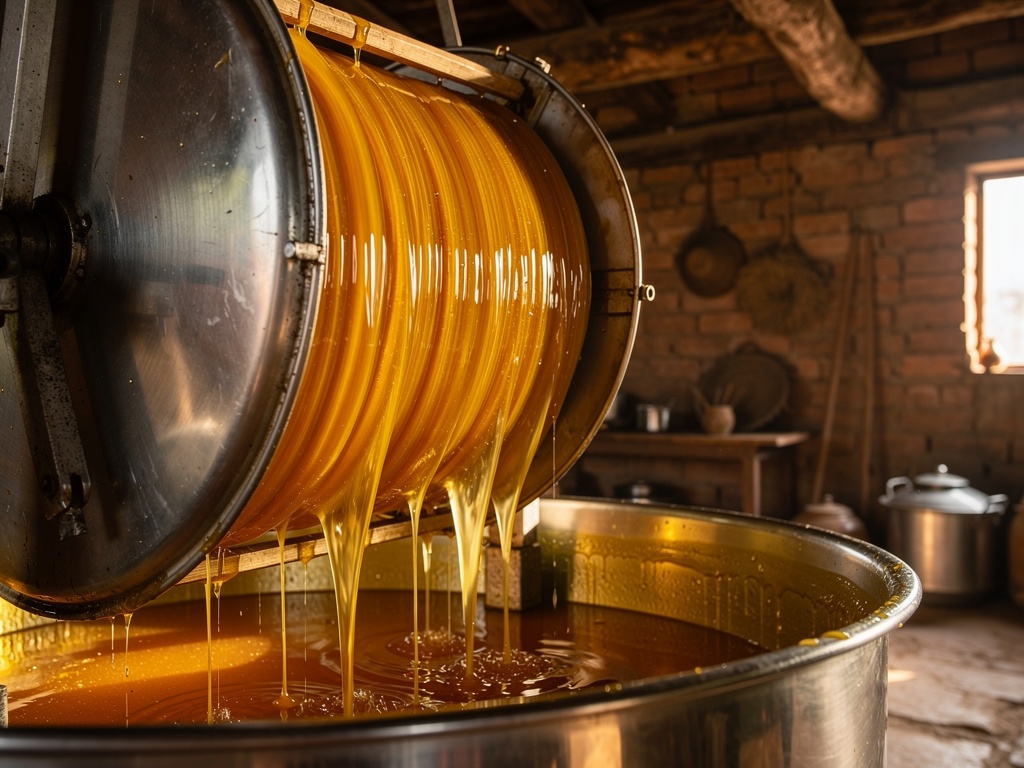
Beekeepers remove capped frames, uncap the cells, and spin the frames in an extractor. Raw honey is filtered only to remove wax and debris — it is not heated.
-
Processing (optional)
Some honey is gently warmed and fine-filtered to stay liquid and clear. Heavy heating and ultra-filtration can destroy beneficial compounds — a key difference between raw and processed honey, covered on the Quality & Purity page.
-
Packing & labelling
Honey is packed and labelled. In India, labels must comply with FSSAI standards, and honest producers add origin, harvest season and testing details.
Migratory beekeeping
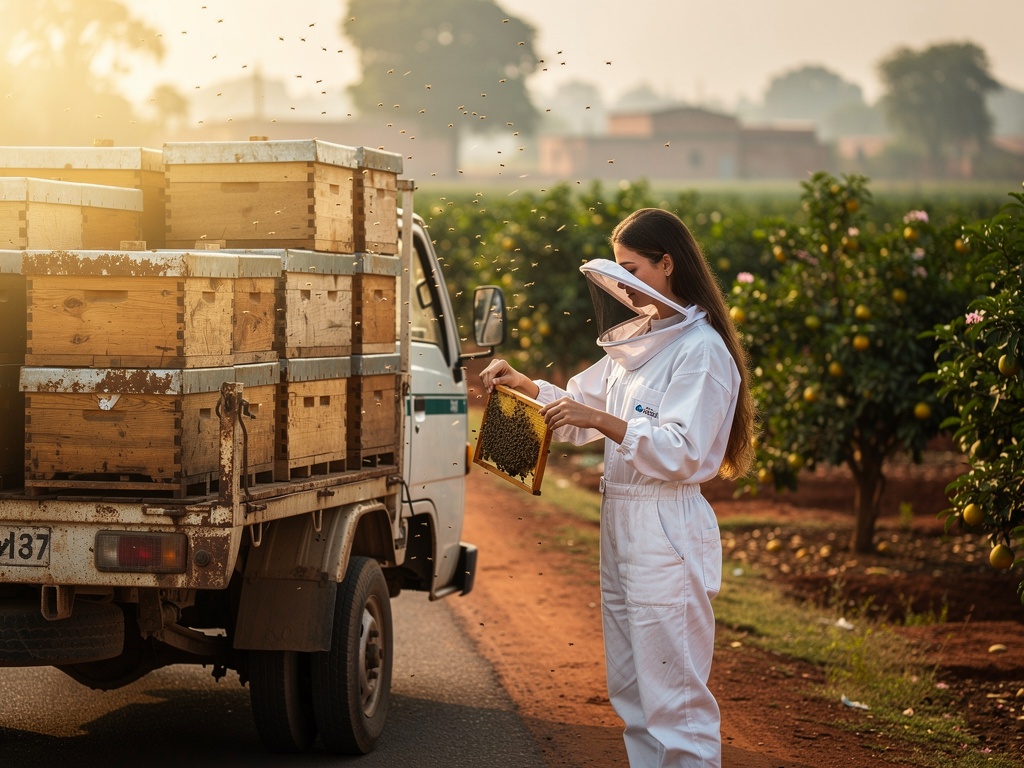
A defining feature of Indian commercial beekeeping is migration. Beekeepers load hives onto trucks and follow the flowering calendar — mustard in winter in the north, litchi in spring in Bihar, sunflower and other crops through the year. This maximises honey yield and, crucially, provides pollination services to farmers who may pay for hives to be placed in their fields.
The National Beekeeping & Honey Mission
Launched in 2020 under the Ministry of Agriculture and Farmers' Welfare, the National Beekeeping & Honey Mission (NBHM) is the policy engine of the "Sweet Revolution". It funds and coordinates:
- Scientific beekeeping: training, modern hives, disease management and hygienic extraction.
- Quality & standards: promoting testing and compliance so Indian honey meets FSSAI and export standards.
- Livelihoods: support for small and marginal farmers, women's self-help groups and tribal collectors.
- Pollination: expanding the use of bees as crop pollinators, which is where the biggest economic value lies.
- Market linkages: helping producers reach domestic and export markets, including through APEDA.
The National Bee Board acts as the technical and coordinating body under the mission, running training programmes and supporting state beekeeping missions.
Pollination: the hidden value
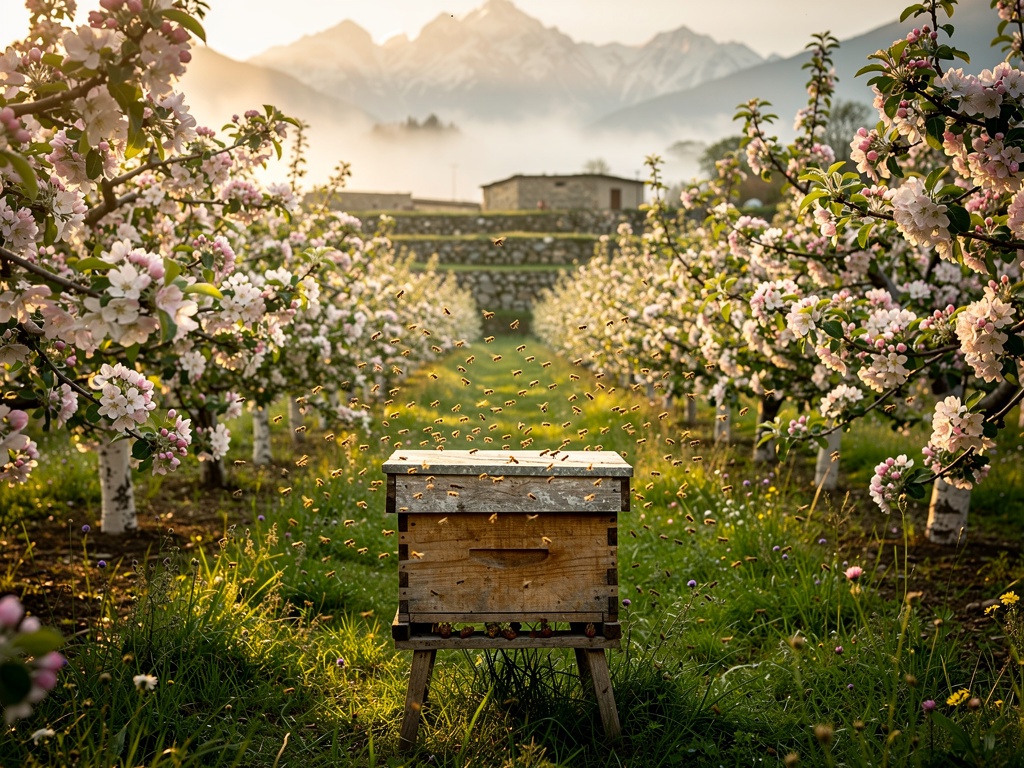
Honey is only part of the story. Bees pollinate crops like mustard, sunflower, apple, litchi, almond and countless vegetables. The value of this pollination is estimated to be many times the value of the honey itself — in the tens of thousands of crores. This is why beekeeping is framed as an agricultural service, not just a honey business, and why protecting bee health matters far beyond the jar.
Raw vs processed — a quick preview
Production choices directly affect what you buy:
- Raw honey: extracted and lightly filtered, never heated above hive temperature. Retains enzymes, pollen and antioxidants; may crystallize naturally.
- Processed honey: gently or heavily heated and filtered for clarity and a long liquid shelf life. Some beneficial compounds are reduced.
- Blended honey: mixed from multiple sources or origins, often for consistent flavour and price — but this can hide origin and dilute single-origin character.
The full, honest breakdown — including what "pure" legally means and how adulteration happens — is on the Quality, Purity & Authenticity page.
Keep exploring
- Quality & Purity — the standards that protect the product
- Bees of India — the species doing the work
- Ethics & Livelihoods — the people behind production
- Buying Guide — how to choose what to buy